
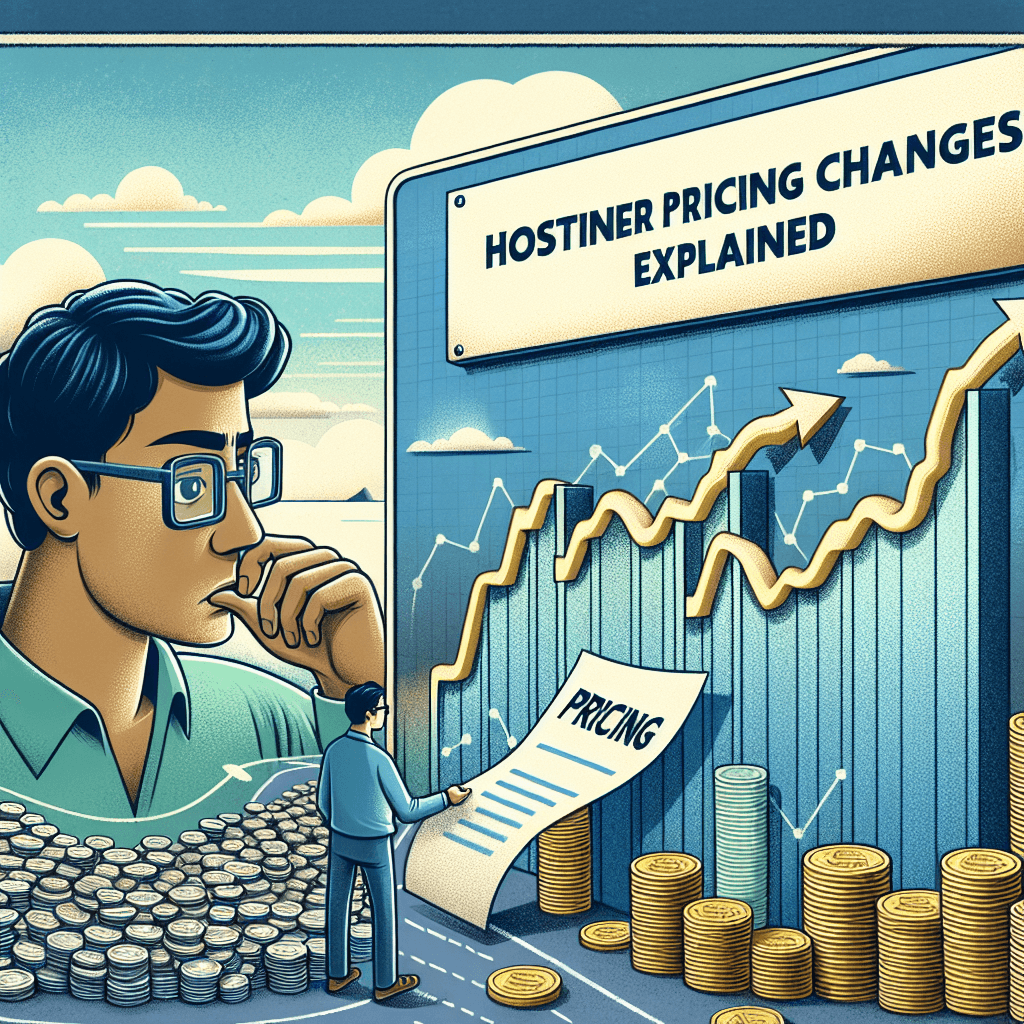
Understanding web hosting pricing can feel like navigating a maze, and when providers adjust their structures, it can become even more perplexing. Hostinger, a popular choice known for its affordability and performance, is no exception. Many users, from beginners launching their first blog to seasoned developers managing multiple sites, are often caught off guard by what they perceive as “pricing changes.”
But are these truly changes, or are they simply a part of a common industry practice that often goes misunderstood? This comprehensive guide will demystify Hostinger’s pricing model, explain the nuances between introductory and renewal rates, shed light on potential add-ons, and equip you with the knowledge to make informed decisions for your website hosting needs.
Whether you’re considering Hostinger for the first time or are an existing customer approaching your renewal date, understanding the full scope of their pricing is crucial. We’ll break down the various hosting types, detail how pricing works across different terms, and offer strategies to manage your hosting budget effectively.
Table of Contents
- Understanding Hostinger’s Core Pricing Philosophy
- Hostinger’s Main Hosting Types and Their Price Structures
- Shared Web Hosting
- Cloud Hosting
- VPS Hosting
- WordPress Hosting
- Other Services and Add-ons
- The Truth About “Pricing Changes”: Introductory vs. Renewal Rates
- Why the Discrepancy?
- The Impact on Your Budget
- Deciphering Hostinger’s Promotional Offers and Discounts
- Seasonal Sales and Black Friday Deals
- Coupon Codes and Affiliate Promotions
- Hidden Costs? What to Look Out For Beyond the Base Price
- Domain Registrations and Renewals
- SSL Certificates (Beyond the Free Tier)
- Daily Backups
- Priority Support
- Website Builder Features
- Strategies to Manage and Mitigate Hostinger Costs
- Locking in Longer Terms
- Monitoring Your Renewal Dates
- Leveraging Hostinger’s Money-Back Guarantee
- Comparing Hostinger to Alternatives
- Hostinger’s Rationale: Why This Pricing Model Works for Them
- Making an Informed Decision: Is Hostinger Still a Good Deal?
- Conclusion
- FAQ
Understanding Hostinger’s Core Pricing Philosophy
Hostinger has built its reputation on offering high-quality web hosting services at incredibly competitive prices. Their philosophy often revolves around attracting new customers with attractive, low introductory rates, allowing them to experience the platform’s features, performance, and user-friendly interface without a significant upfront investment.
This approach is not unique to Hostinger; it’s a prevalent strategy across the web hosting industry. The idea is to lower the barrier to entry for individuals and businesses looking to get online, while also ensuring the long-term sustainability of the service through standard renewal rates. For users, understanding this dual-tier pricing is the single most important aspect of deciphering Hostinger’s (and many other hosts’) “pricing changes.”
Their commitment extends beyond just low prices, aiming to provide a robust infrastructure, hPanel (their custom control panel), and a comprehensive suite of tools that appeal to a wide spectrum of users. However, the path to understanding your total cost of ownership begins with clearly differentiating between the initial promotional period and the standard pricing that applies afterward.
Hostinger’s Main Hosting Types and Their Price Structures
Hostinger offers a diverse range of hosting solutions, each tailored to different needs and varying in price. Understanding these options is key to comprehending their pricing dynamics.
Shared Web Hosting
This is Hostinger’s most popular offering, ideal for beginners, small websites, and blogs. Shared hosting means your website shares server resources with other websites. Hostinger typically offers three main shared hosting plans:
- Single Web Hosting: Their entry-level plan, usually the cheapest, suitable for a single small website.
- Premium Web Hosting: A step up, offering more resources, unlimited websites, more storage, and often a free domain for the first year. This is a very popular choice.
- Business Web Hosting: Designed for growing businesses, providing even more resources, daily backups, and often advanced features like free CDN.
The pricing for these plans is structured with steep discounts for longer initial commitments (e.g., 48 months), followed by a higher renewal rate.
Cloud Hosting
Cloud hosting provides dedicated resources within a cloud environment, offering more power, scalability, and reliability than shared hosting. It’s suitable for larger websites, e-commerce stores, or applications with fluctuating traffic. Hostinger’s cloud plans (e.g., Cloud Startup, Cloud Professional, Cloud Enterprise) are priced higher than shared hosting, reflecting the increased resources and performance. Like shared hosting, initial promotional rates are common for longer terms.
VPS Hosting
Virtual Private Server (VPS) hosting gives you a virtual dedicated server with root access, allowing for greater control and customization. It’s for users with technical expertise who need specific configurations or applications. Hostinger’s VPS plans are resource-based, with pricing varying significantly depending on the CPU, RAM, storage, and bandwidth allocated. While still competitive, VPS hosting costs are generally higher than shared or basic cloud options and can also feature introductory offers.
WordPress Hosting
While often built on shared or cloud infrastructure, Hostinger offers specialized WordPress hosting plans that are optimized for the popular CMS. These plans typically include WordPress-specific features like one-click installation, LiteSpeed Cache, and tailored security. The pricing structure closely mirrors that of shared or cloud hosting, depending on the underlying resources provided.
Other Services and Add-ons
Beyond core hosting, Hostinger also offers services like:
- Domain Name Registration: Often free for the first year with certain plans, but always incurs a renewal cost.
- Professional Email Hosting: Sometimes bundled, sometimes an add-on.
- SSL Certificates: Basic SSL (Let’s Encrypt) is free, but premium SSL options are available for purchase.
- Website Builder: Included with hosting plans, but access to premium templates or features might be tied to specific tiers.
Understanding that each of these services has its own pricing, especially for renewals, is crucial for budgeting your overall Hostinger costs.
The Truth About “Pricing Changes”: Introductory vs. Renewal Rates
The most common “pricing change” users encounter with Hostinger, and indeed with most hosting providers, is the difference between the deeply discounted introductory rate and the standard renewal rate. It’s not usually a change in the existing price of a service you’re already paying for mid-term, but rather the expiry of an initial promotional offer.
Here’s a simplified illustration of how this generally works:
| Plan Type | Initial Price (e.g., 48 months) | Renewal Price (e.g., 12 months) |
|---|---|---|
| Premium Shared Hosting | ~$2.99/month | ~$7.99/month |
| Business Shared Hosting | ~$3.99/month | ~$9.99/month |
| Cloud Startup | ~$9.99/month | ~$18.99/month |
| VPS 1 | ~$3.99/month | ~$7.99/month |
Note: These are illustrative prices and may not reflect current Hostinger pricing, which can vary based on region and ongoing promotions. Always check Hostinger’s official website for the most up-to-date figures.
Why the Discrepancy?
Several factors contribute to this pricing model:
- Customer Acquisition: Low introductory rates are powerful tools for attracting new customers in a highly competitive market. They reduce the initial financial barrier, making it easier for users to try out Hostinger’s services.
- Infrastructure and Support Costs: Maintaining a robust hosting infrastructure, providing 24/7 customer support, developing new features, and investing in security all come at a significant cost. The standard renewal rate helps cover these ongoing operational expenses.
- Customer Loyalty: The expectation is that once customers experience the quality of service and become settled with their website, they will be willing to pay the standard rate to avoid the hassle of migrating to another provider.
- Long-Term Value: While the renewal rate is higher, it’s often still competitive when considering the features, performance, and support offered, especially compared to some premium providers.
The Impact on Your Budget
For new users, the attractive introductory prices can lead to significant savings, especially when opting for longer billing cycles (e.g., 24 or 48 months). However, it’s crucial to factor in the higher renewal cost when planning your long-term budget. Failing to do so can lead to “sticker shock” when your initial term expires, potentially forcing you to either pay more than expected or embark on a potentially disruptive migration process.
It’s always recommended to:
- Read the fine print: Pay close attention to the terms and conditions, specifically the renewal rates, before committing.
- Calculate total costs: Consider the initial term’s total cost plus the first renewal term’s cost to get a realistic picture of your investment.
- Plan ahead: Mark your renewal date on your calendar and budget accordingly.
Deciphering Hostinger’s Promotional Offers and Discounts
Hostinger is known for its frequent and aggressive promotional offers. These aren’t necessarily “pricing changes” but rather temporary opportunities to secure hosting at an even lower introductory rate. Understanding these can help you maximize your savings.
Seasonal Sales and Black Friday Deals
Hostinger regularly participates in major sales events like Black Friday, Cyber Monday, New Year’s, and other seasonal promotions. During these periods, you can often find their steepest discounts, sometimes offering up to 90% off their already low introductory prices. These sales are typically for new customers and for longer billing cycles.
Key takeaway: If you’re planning to start a new website and aren’t in a rush, waiting for a major sale event could save you a significant amount over a multi-year commitment.
Coupon Codes and Affiliate Promotions
Beyond broad sales, Hostinger also provides various coupon codes that can offer additional savings. These might be found through:
- Influencers and content creators: Many tech bloggers, YouTubers, and review sites have special Hostinger coupon codes for their audience.
- Direct Hostinger promotions: Sometimes Hostinger will display special codes directly on their website or send them out via email newsletters.
While these codes are designed to attract new sign-ups, they are generally applied to the introductory price, meaning the renewal rate will still revert to the standard cost.
Important Note: Always ensure you’re using official and valid coupon codes. Be wary of unofficial sites promising unrealistic discounts, as they might be outdated or invalid.
Hidden Costs? What to Look Out For Beyond the Base Price
The term “hidden costs” can be a bit of a misnomer in the hosting world, as most reputable providers clearly list all fees. However, items that are optional add-ons, or included for free initially but cost money upon renewal, can feel like hidden costs if you’re not paying close attention during the checkout process.
Here’s what to look out for when budgeting your Hostinger costs:
Domain Registrations and Renewals
- Initial Offer: Many Hostinger plans (like Premium and Business Shared Hosting) include a free domain registration for the first year when you sign up for a long-term plan (e.g., 12 months or more).
- Renewal Cost: After the first year, your domain name will need to be renewed at the standard annual rate. Domain renewal prices can vary depending on the TLD (e.g., .com, .net, .org) and are typically around $10-$15+ per year. This is a common and necessary expense for any website.
SSL Certificates (Beyond the Free Tier)
- Free SSL: Hostinger provides a free SSL certificate from Let’s Encrypt with all its hosting plans. This is essential for website security, SEO, and user trust.
- Premium SSL: Hostinger also offers premium SSL certificates (e.g., from Comodo) as an upsell during checkout or through your hPanel. These often come with higher warranty levels and additional features, but are typically unnecessary for most small to medium websites. The free Let’s Encrypt SSL is usually sufficient.
Daily Backups
- Included in higher tiers: Hostinger’s Business Shared Hosting and Cloud Hosting plans typically include daily backups as a standard feature.
- Add-on for lower tiers: For Single and Premium Shared Hosting plans, daily backups might be offered as an optional add-on during checkout. This service, while crucial for disaster recovery, will add to your monthly or annual cost.
- Recommendation: While not always free on lower plans, investing in a backup solution (either through Hostinger or a third-party plugin/service) is highly recommended for any website.
Priority Support
Hostinger’s standard customer support is generally very responsive, but sometimes they offer “priority support” as an upsell. This typically means your queries might get an even faster response time. For most users, the standard support is adequate, but if you run a mission-critical website, it might be something to consider.
Website Builder Features
Hostinger includes its user-friendly website builder with all plans. However, some premium templates or advanced features within the builder might be exclusive to higher-tier hosting plans or require an additional subscription. Always check what’s included with your chosen plan if the website builder is a primary reason for your purchase.
The takeaway here is transparency. Hostinger, like other hosts, presents these options during checkout. It’s up to the user to review their cart carefully before completing the purchase to understand the total initial and potential renewal costs.
Strategies to Manage and Mitigate Hostinger Costs
Understanding Hostinger’s pricing model is the first step; implementing strategies to manage those costs is the next.
Locking in Longer Terms
This is the most effective way to secure the lowest possible monthly rate. Hostinger offers significant discounts for commitments of 12, 24, and especially 48 months. While it means a larger upfront payment, the per-month cost can be drastically lower than a month-to-month or even 12-month plan.
- Consider your long-term plans: If you’re confident in your website project and expect it to be online for several years, a 48-month plan is almost always the most cost-effective choice for the initial term.
- Do the math: Calculate the total cost of a 12-month plan vs. a 48-month plan to see the savings. Remember, this only applies to the introductory period.
Monitoring Your Renewal Dates
Proactively tracking your hosting renewal date is essential. Hostinger typically sends renewal notifications, but having it marked on your personal calendar gives you time to:
- Budget for the higher renewal cost: Ensure funds are available.
- Evaluate your needs: Do you still need the same plan, or can you downgrade/upgrade?
- Consider alternatives: If the renewal price is too high for your budget, you have time to research and migrate to another provider without your website going offline.
- Check for last-minute promotions: Sometimes Hostinger might offer existing customers a small discount if they renew early, though this isn’t guaranteed.
Leveraging Hostinger’s Money-Back Guarantee
Hostinger offers a 30-day money-back guarantee. This is a great safety net if you sign up for a longer term but realize within the first month that the service isn’t right for you or you made a mistake with your plan choice. This allows you to try their service risk-free and get a full refund if you cancel within the specified period.
Comparing Hostinger to Alternatives
Even with strategies to manage costs, sometimes the renewal price simply doesn’t fit your budget or perceived value. It’s always wise to periodically compare Hostinger’s offerings and renewal prices with other reputable hosting providers.
When comparing, look beyond just the price tag:
- Features: What’s included (storage, bandwidth, email, backups, CDN)?
- Performance: Uptime guarantees, speed test results.
- Support: Availability (24/7), channels (live chat, tickets), quality.
- User Interface: Ease of use (hPanel vs. cPanel, etc.).
- Scalability: Options to upgrade as your website grows.
This allows you to make an informed decision, whether it’s staying with Hostinger or migrating to a different provider that offers a better value proposition at your renewal stage.
Hostinger’s Rationale: Why This Pricing Model Works for Them
From a business perspective, Hostinger’s pricing model, which emphasizes low introductory rates followed by higher renewals, is a well-established and effective strategy.
- Market Penetration: In a saturated hosting market, aggressive introductory pricing allows Hostinger to stand out and attract a continuous stream of new customers. This helps them grow their market share rapidly.
- Customer Lifecycle Value: While the initial revenue per customer might be low, the goal is to retain customers over several years. The higher renewal rates contribute significantly to the long-term customer lifecycle value. Many customers, once established, prefer to stay rather than undergo the effort of migration.
- Investment in Infrastructure and Technology: The revenue generated from renewal rates enables Hostinger to invest heavily in its global server infrastructure, develop new technologies (like hPanel), enhance security measures, and provide 24/7 customer support. This continuous investment ensures they remain competitive and can offer a high-quality service.
- Covering Operational Costs: Running a global hosting operation involves substantial fixed and variable costs, including hardware, data centers, electricity, bandwidth, software licenses, and a large employee base. Renewal fees are essential for covering these ongoing operational expenses.
- Competitive Advantage: By offering incredibly low entry points, Hostinger can capture a segment of the market that might otherwise be priced out of quality hosting. This creates a large user base that can then be offered additional services or upgrades over time.
This model allows Hostinger to balance the need for new customer acquisition with the financial sustainability required to deliver a reliable and evolving hosting service.
Making an Informed Decision: Is Hostinger Still a Good Deal?
Despite the difference between introductory and renewal rates, Hostinger generally remains a very strong contender in the web hosting space, often providing excellent value for money.
For New Users:
Hostinger is an excellent choice for new users, beginners, and small businesses who want to launch a website without a hefty upfront investment. The low introductory rates, especially on longer terms, make it incredibly accessible. Their hPanel is user-friendly, and their performance is often lauded. Just be aware of the renewal price from the outset.
For Existing Users:
If you’re an existing user facing a renewal, you need to weigh the convenience of staying against the potential savings of migrating.
- Value Assessment: Are you happy with Hostinger’s performance, uptime, and customer support? Do the features meet your current needs? If yes, the renewal price, while higher, might still represent good value compared to the effort of switching.
- Migration Costs/Effort: Migrating a website can be time-consuming and sometimes involve professional help. Factor this “cost” (time or money) into your decision.
- Budget: Does the renewal price fit comfortably within your budget? If not, it’s a clear sign to explore alternatives.
Overall Value:
When you consider Hostinger’s robust feature set (free SSL, website builder, often free domain for the first year), solid performance, and global data centers, even their standard renewal rates are often competitive. The key is to understand the pricing structure upfront and not be surprised by the change from promotional to standard rates. By doing your homework and planning ahead, Hostinger can certainly be a good long-term hosting partner.
Conclusion
Understanding Hostinger’s pricing structure is less about “changes” and more about recognizing the industry-standard model of introductory versus renewal rates. Hostinger excels at attracting new customers with aggressive promotional offers, making quality web hosting accessible to everyone. However, being aware of the standard renewal costs and any optional add-ons during checkout is paramount for responsible budgeting.
By locking in longer terms, carefully reviewing your cart, monitoring renewal dates, and periodically assessing your hosting needs, you can leverage Hostinger’s excellent services without encountering unexpected financial surprises. Hostinger remains a powerful and user-friendly platform, offering great value for both beginners and experienced webmasters, as long as you approach your purchase with a clear understanding of its pricing dynamics.
What are your thoughts on Hostinger’s pricing model? Have you experienced a “price change” at renewal? Share your experiences and tips in the comments below!
FAQ
Q1: Why did my Hostinger bill go up after the first year?
A1: This is the standard practice in the web hosting industry. Your initial purchase likely included a heavily discounted introductory rate for a specific term (e.g., 12, 24, or 48 months). Once that term expires, your plan renews at the standard, non-promotional rate, which is higher.
Q2: Is Hostinger’s renewal pricing competitive compared to other hosts?
A2: Generally, yes. While the renewal rate is higher than the initial promotional price, Hostinger’s standard rates often remain competitive, especially when considering the features, performance, and customer support they offer. It’s always wise to compare with other providers at your renewal time.
Q3: Can I negotiate my Hostinger renewal price?
A3: While some hosting providers might offer minor discounts upon request for long-standing customers, Hostinger typically has fixed renewal rates. Your best strategy is to secure the longest possible term initially to lock in the lowest price for the longest duration.
Q4: Does Hostinger offer a free domain forever?
A4: No. Hostinger often includes a free domain registration for the first year with its Premium and Business shared hosting plans (and others) when you commit to a longer term. After the first year, you will need to pay the standard annual renewal fee for your domain name.
Q5: What are common “hidden costs” I should watch out for with Hostinger?
A5: There are no truly “hidden” costs, but users might overlook optional add-ons or future renewal fees for initially free services. These include domain renewals, premium SSL certificates (if you opt for them over the free Let’s Encrypt), and daily backups (if not included in your base plan and you choose to add them). Always review your cart thoroughly before checkout.
Q6: What happens if I don’t renew my Hostinger plan?
A6: If you don’t renew your Hostinger plan, your website will eventually go offline. Hostinger typically provides grace periods and notifications before permanent deletion, allowing you time to renew or migrate your site. However, it’s best to act before your service expires to avoid downtime.
Q7: Can I switch Hostinger plans at renewal?
A7: Yes, you can usually upgrade or downgrade your hosting plan when your current term is up for renewal. This is a good opportunity to assess your current website needs and adjust your hosting package accordingly to ensure you’re not paying for more resources than you need, or too few.
Q8: Does Hostinger offer a money-back guarantee?
A8: Yes, Hostinger typically offers a 30-day money-back guarantee. This allows you to try their services risk-free and get a full refund if you decide to cancel within the first 30 days of your purchase.

लेटेस्ट अपडेट्स, ट्रेंडिंग न्यूज़, वायरल टॉपिक्स, फैशन से जुड़ी जानकारी और बहुत कुछ। मोबाइल लॉन्च, टेक तुलना और ताज़ा मुद्दों पर इन-डेप्थ आर्टिकल्स के साथ हमेशा रहें अपडेटेड